

The University of Valencia has completed the renovation of its General Physics laboratory. The project was managed by the Technical and Maintenance Service (STM) under the leadership of the Vice-Rectorate for Economics and Infrastructure.
Health and sustainability as key objectives
The renovation was designed to improve user comfort and wellbeing. At the same time, it aimed to minimise the building’s environmental impact by combining healthy materials with energy-efficient solutions.
Project delivery and key participants
The laboratory was officially completed on 10 September 2024. During the handover ceremony, several representatives attended the event, including the Vice-Rector for Economics and Infrastructure, Justo Herrera, and the Dean of the Faculty of Physics, Enric Valor.
In addition, members of the STM technical team participated in the presentation. Architect Samuel Ballester led the design and execution of the project, while technical architect María Dolores Yagüe supervised the construction works. Meanwhile, Cristina Mateo, Director of STM, coordinated the overall project.
Finally, faculty members, designer Julio Mascaró, and representatives from construction company Consval 2012 also attended the official handover.
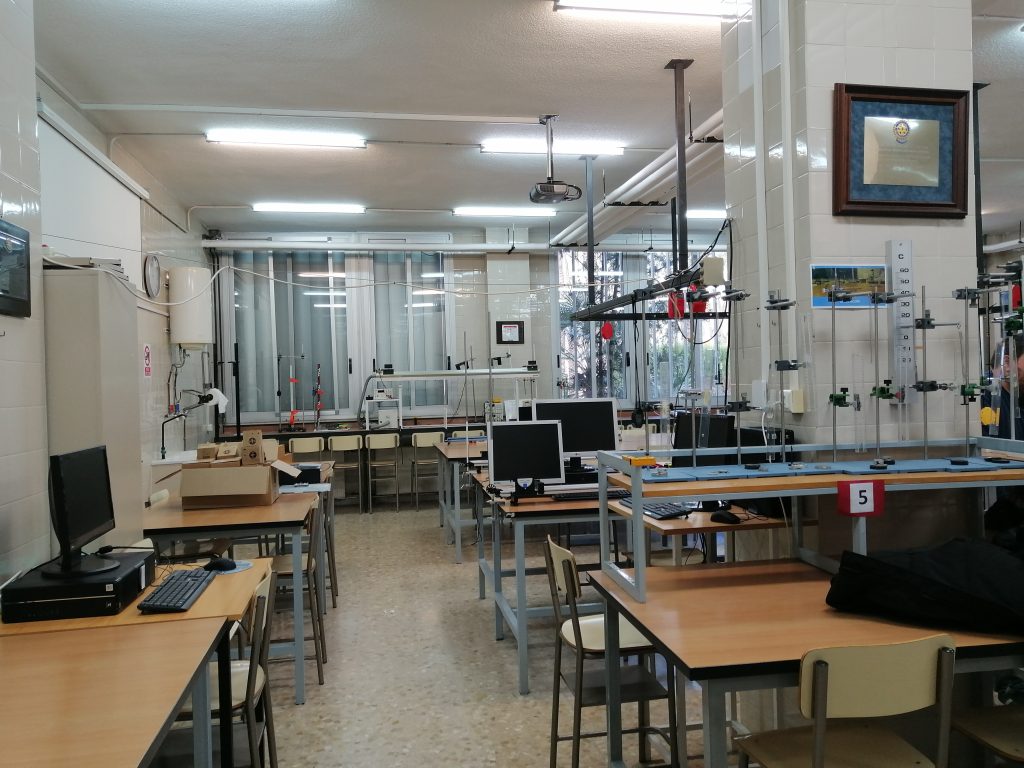
Circular and healthy materials for enhanced comfort, acoustics and indoor performance
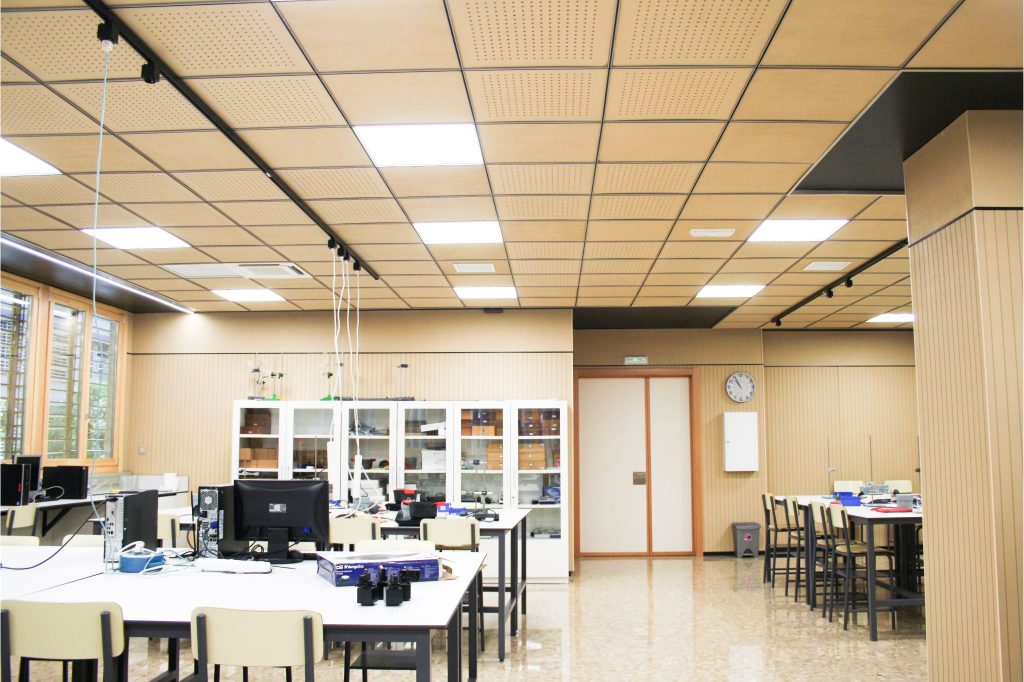
The renovation incorporates HONEXT®, a circular and healthy material, throughout the wall cladding and ceilings. As a result, the new panels improve acoustic performance while creating warmer and more comfortable learning spaces.
In addition, the panels were installed over a 6 cm natural cork base. This solution further enhances both thermal and acoustic insulation.
To protect the surfaces, the boards were finished with a Sikkens (AkzoNobel) water-based varnish. Consequently, the material maintains its recyclability and healthy indoor performance while contributing to a safe indoor environment.
Certified circular and healthy materials
HONEXT® boards are Cradle to Cradle Certified® Gold and Material Health Certificate™ Gold Level certified. These certifications confirm both their circularity and their safety for indoor applications.
The boards are manufactured from residual cellulose fibres recovered from the paper industry. Instead of being sent to landfill or incineration, this waste is transformed into high-performance boards through HONEXT®’s patented biotechnology process. As a result, the material supports a wide range of interior applications while reducing environmental impact.
Positive environmental impact
The use of HONEXT® generated measurable environmental benefits:
- 315 m² of HONEXT® installed
- 2,268 kg of paper waste recovered
- 2,517 kg of CO₂ stored
Health and sustainability: reducing energy consumption
Energy efficiency was a key priority throughout the renovation. Therefore, every design decision focused on reducing energy consumption while improving user comfort.
At the same time, the project supports the University of Valencia’s commitment to climate action.
Commitment to climate action and the SDGs
Recently, the University of Valencia improved its position in the THE University Impact Rankings. This international ranking evaluates how universities contribute to the United Nations Sustainable Development Goals (SDGs).
Today, the University is ranked across all 17 SDGs. In particular, it holds 27th place worldwide for SDG 13 – Climate Action.
Natural light and thermal performance
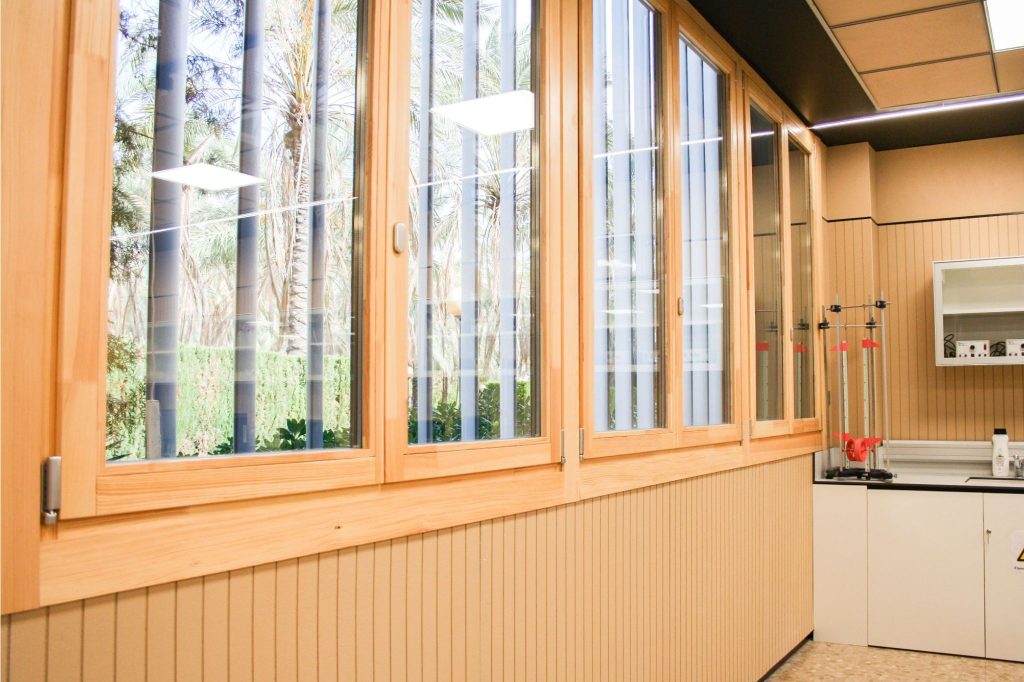
Large windows maximise natural daylight throughout the laboratory. As a result, the need for artificial lighting is significantly reduced.
Furthermore, low-emissivity solar glass improves thermal performance by limiting heat transfer between the interior and the exterior.
Wooden window frames were also selected. Because timber stores carbon naturally, it contributes to a warmer, healthier and more comfortable indoor environment.
Solar control and ventilation
External louvres help control solar radiation while allowing natural daylight to enter the building. Consequently, indoor temperatures remain more stable throughout the year.
Meanwhile, a heat recovery ventilation system continuously renews indoor air without losing thermal energy. This solution maintains comfortable temperatures while ensuring a clean and healthy indoor environment.
High energy performance
Together, these measures significantly reduce the demand for heating and air conditioning. In addition, the laboratory uses energy-efficient LED lighting to optimise electricity consumption.
Overall, the refurbishment achieved an airtightness value of 2.1 air changes per hour, delivering energy performance that closely aligns with Passivhaus principles.
Principles of Passivhaus design
The refurbishment of the General Physics laboratory followed the five core principles of Passivhaus design, helping to improve energy efficiency, indoor comfort, and building performance.
- High-performance windows. The laboratory is fitted with timber-framed windows, triple glazing, and low-emissivity solar glass. Together, these elements maximise thermal insulation and airtightness.
- Efficient ventilation. A heat recovery system provides a constant supply of fresh air. As a result, indoor spaces remain comfortable without the need for additional heating.
- Thermal insulation. A 6 cm natural cork layer improves insulation throughout the building. Consequently, the laboratory retains heat during winter and reduces overheating in summer.
- Airtight construction. The refurbishment includes an airtight plaster layer, specialised paint, and flexible window seals. This approach reduces energy losses while improving comfort.
- Reduced thermal bridges. Careful material selection minimises thermal bridges. Therefore, the building achieves better overall thermal performance.
Airtightness performance
The building’s airtightness was verified using a BlowerDoor test. The EnerPHit standard requires an airtightness level of 1.0 air change per hour (ACH).
During the refurbishment, three BlowerDoor tests were carried out to monitor construction quality. Ultimately, the laboratory achieved 2.1 ACH.
Although this result does not meet the EnerPHit target, it is three times better than the 6 ACH required by the Spanish Technical Building Code. Consequently, the project demonstrates a high standard of design and execution.
Applying the three Rs
The refurbishment also followed the principles of Reduce, Reuse and Recycle.
Whenever possible, existing furniture was restored and incorporated into the new laboratory. Likewise, the original terrazzo floor was preserved and polished instead of being replaced. This decision reduced construction waste while extending the life of existing materials.
A model for sustainable university buildings
Overall, the refurbishment provides students with a healthier, more comfortable learning environment. More importantly, it demonstrates how circular materials, Passivhaus principles, and energy-efficient design can transform educational buildings into more sustainable spaces.
More info:
https://energiehaus.es/wp-content/uploads/2023/07/Guia_de_certificacion_de_edificios_PHI_ES.pdf