
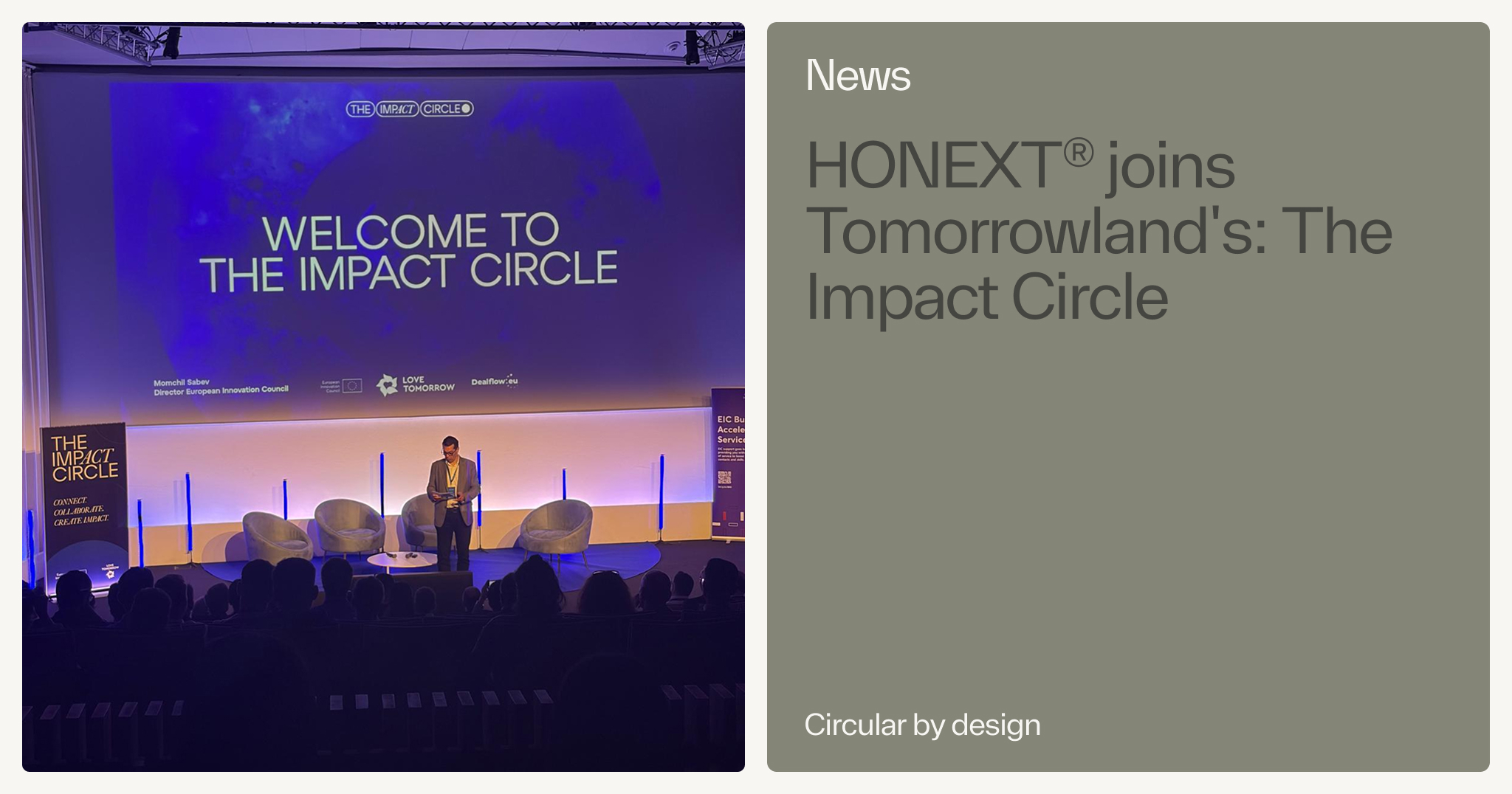
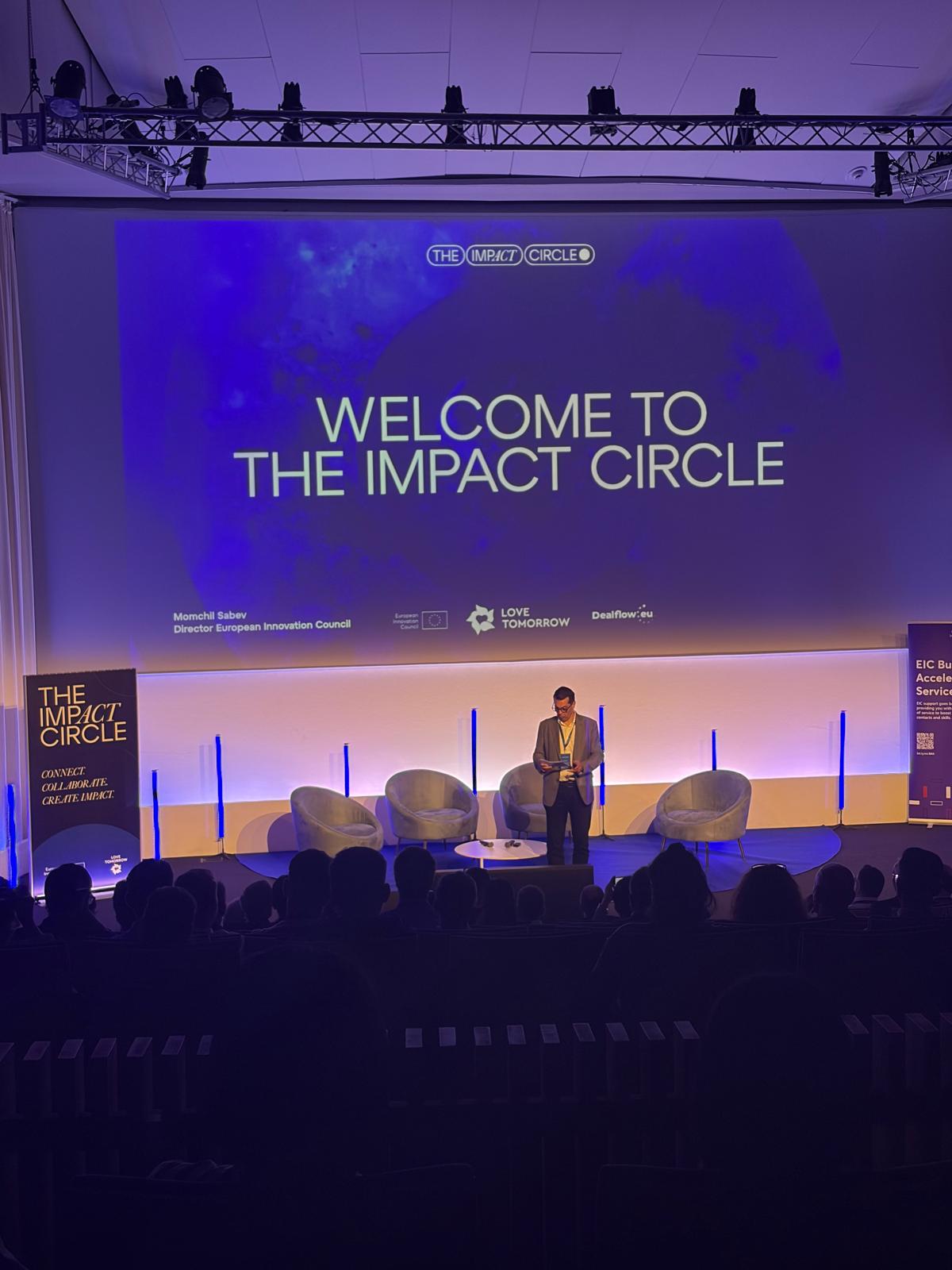
HONEXT® participated in The Impact Circle, the innovation platform integrated within Love Tomorrow by Tomorrowland. The initiative brings together startups, corporations, investors and policymakers to accelerate innovative solutions with real-world impact.
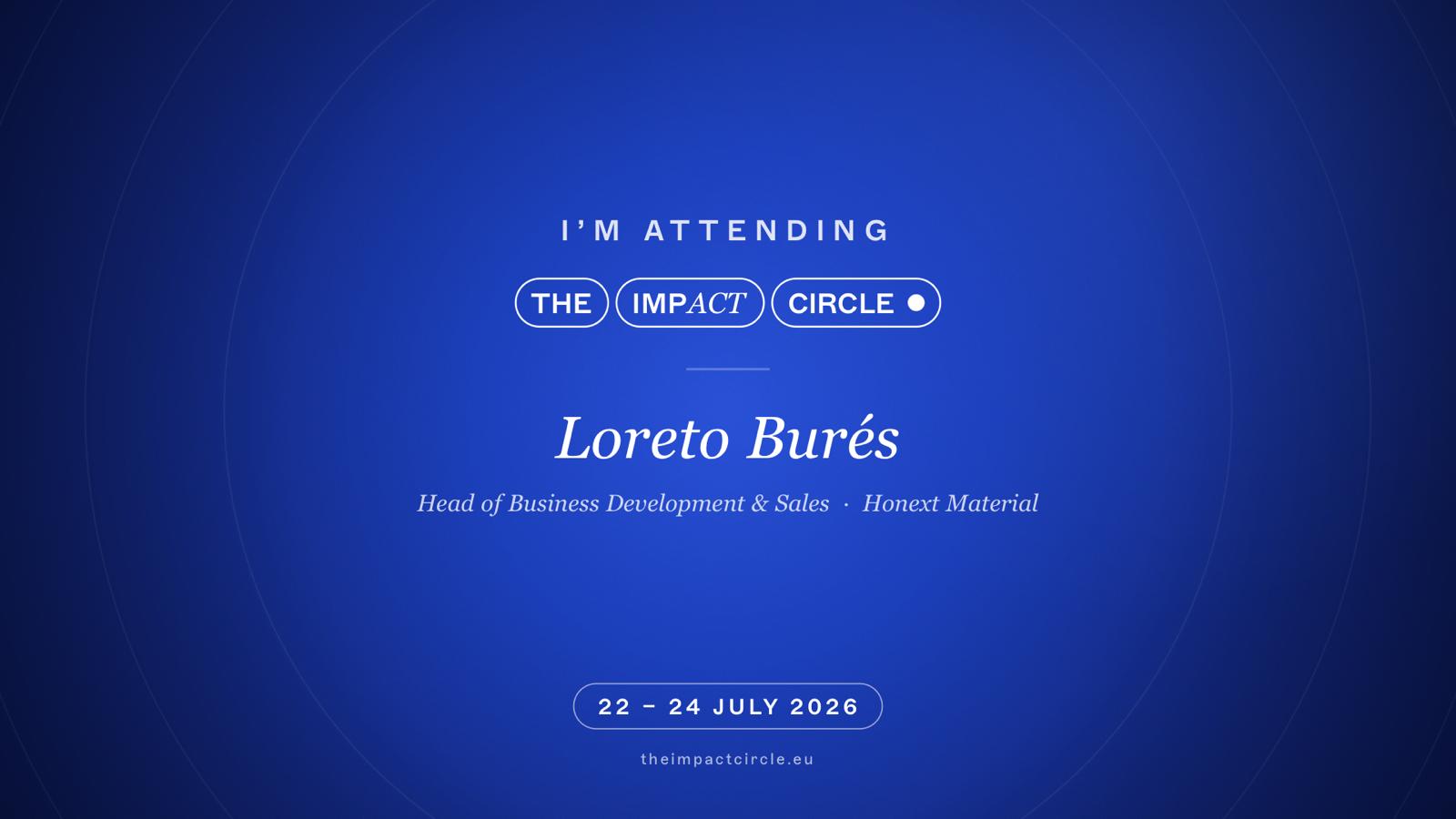
Representing HONEXT® was Loreto Burés, Head of Business Development & Sales. During the event, she connected with international innovators, investors and corporate leaders. In particular, discussions explored new opportunities for circular materials and more sustainable built environments.
HONEXT® and Tomorrowland: connecting circular materials with temporary spaces
The HONEXT® Tomorrowland participation has a clear connection with one of the challenges addressed by Love Tomorrow: Materials & Circular Stage Design.
Temporary spaces, festivals and events require large amounts of material. However, these materials often have a very short useful life.
Therefore, circular design offers an opportunity to rethink this model.
Love Tomorrow is exploring materials and systems that can help transform temporary festival infrastructure into reusable and recyclable solutions. At the same time, these solutions need to support efficient assembly and disassembly, durability and safety.
These objectives are closely aligned with the approach behind HONEXT®.
What is HONEXT®?
HONEXT® is a circular fibreboard for non-structural indoor applications, made from upcycled cellulose fibres recovered from industrial waste streams. The material is designed for applications such as interior wall and ceiling cladding, while its versatility also opens possibilities for exhibition stands, retail environments and temporary installations.
Instead of relying on virgin fibres, HONEXT® gives a new use to cellulose waste that would otherwise have limited recovery options.
Moreover, HONEXT® boards can be processed and customised for different design requirements. This makes the material suitable for projects where circularity, design and technical performance need to work together.
From temporary construction to circular material cycles
Events and exhibitions are particularly relevant environments for circular innovation.
Many temporary installations are designed for days or weeks. Nevertheless, the materials used to build them can have a much longer potential life.
HONEXT® offers a different approach. Its boards can support applications designed for reuse and, ultimately, recycling. As a result, temporary architecture can become part of a broader material cycle rather than automatically becoming waste after an event.
This potential is already visible in applications such as shop fittings, exhibition stands and wall coverings, where HONEXT® can also be machined, milled, finished or digitally printed to meet different design requirements.
Material health as part of circular design
Circularity is not only about keeping materials in use. Material health also matters.
HONEXT® boards are C2C Certified® Material Health Gold according to Version 4.0.
The C2C Certified® Material Health scope evaluates a product specifically in the Material Health category. It focuses on selecting chemicals and materials with the protection of human health and the environment in mind.
This provides an important additional dimension when designing interior and temporary spaces. Materials should not only be considered for what happens to them at the end of their useful life, but also for what they contain while they are in use.
Discover HONEXT certifications
https://honext.eu/certifications/
HONEXT® Tomorrowland: accelerating circular innovation through collaboration
By participating in The Impact Circle at Love Tomorrow by Tomorrowland, Loreto Burés represented HONEXT® in conversations around the future of circular innovation.
The event also created opportunities to build relationships with startups, corporations and investors working on new solutions for materials, infrastructure and sustainable design.
Ultimately, the HONEXT® Tomorrowland connection demonstrates how circular materials can contribute beyond permanent buildings.
Festivals, exhibitions and temporary spaces can also become testing grounds for new material systems. Through better material choices, temporary design can deliver a lasting positive impact — without creating lasting waste.